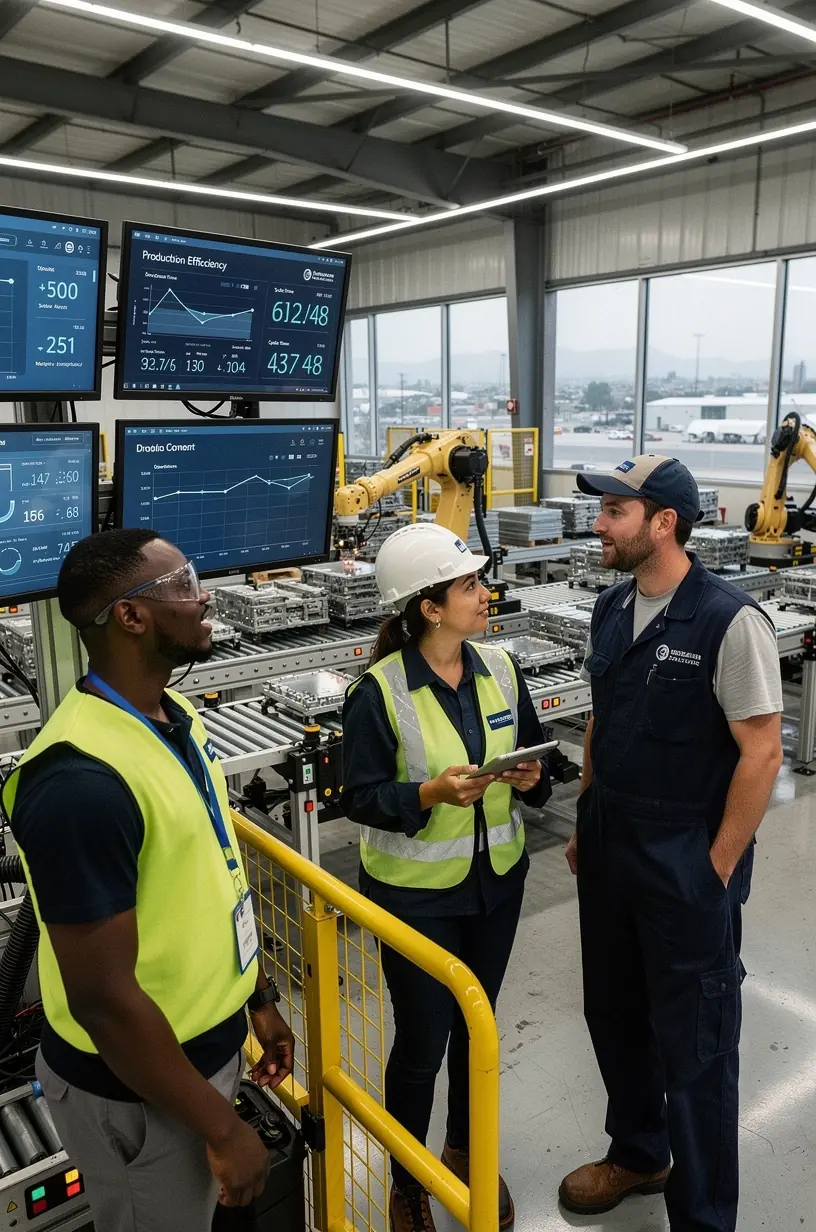
The Role of AI in Streamlining Manufacturing Processes
In today's competitive manufacturing landscape, companies are constantly seeking ways to enhance efficiency and reduce costs. The integration of artificial intelligence (AI) into manufacturing workflows has emerged as a promising solution, offering insights and automation that can lead to significant improvements.
Understanding the Basics of AI in Manufacturing
AI leverages advanced algorithms and machine learning techniques to analyze vast amounts of data, allowing manufacturers to make informed decisions. According to industry research, adopting AI can improve process efficiency by up to 25% in many scenarios. This efficiency gain is often a result of optimized production schedules, reduced downtime, and predictive maintenance.

"AI has the potential to transform manufacturing by enabling real-time decision-making and predictive analytics," notes Dr. Jane Thompson, an expert in industrial automation.
Common Applications of AI in Manufacturing
Several key areas illustrate how AI can streamline manufacturing processes:
- Predictive Maintenance: AI systems can analyze machine performance data to anticipate failures before they occur. This approach, which studies show reduces unplanned downtime by 20-30%, is particularly effective in environments with complex machinery.
- Quality Control: AI-driven visual inspection systems can detect defects in products, often with greater accuracy than human inspectors. This helps maintain high-quality standards and reduces waste.
- Supply Chain Optimization: By analyzing data from various sources, AI can forecast demand with greater accuracy, leading to improved inventory management and reduced holding costs.
Implementation Challenges and Considerations
While the benefits of AI are clear, implementing these technologies is not without challenges. Many organizations face issues such as:
- Data Integration: Incorporating AI requires integration with existing systems, which can be complex and time-consuming, typically taking 3-6 months to achieve.
- Skill Gap: There is often a learning curve involved in adopting AI technologies. Employees may need training to effectively use the new tools, and some organizations may need to hire specialized talent.
- Cost Concerns: Initial investments in AI systems can be substantial. However, many companies find that the long-term savings and efficiency gains justify the upfront costs.
The Future of AI in Manufacturing
Looking ahead, the role of AI in manufacturing is expected to expand significantly. As technology advances, AI systems will become more accessible and easier to implement. Industry experts suggest that manufacturers who invest in AI now are likely to see a competitive advantage in the coming years.
Conclusion
Incorporating AI technologies in manufacturing processes can lead to enhanced efficiency, reduced waste, and improved quality control. While challenges exist, the potential benefits are substantial. Organizations considering this shift should focus on strategic planning, adequate training, and gradual implementation to maximize their investment in AI.
Learn More